
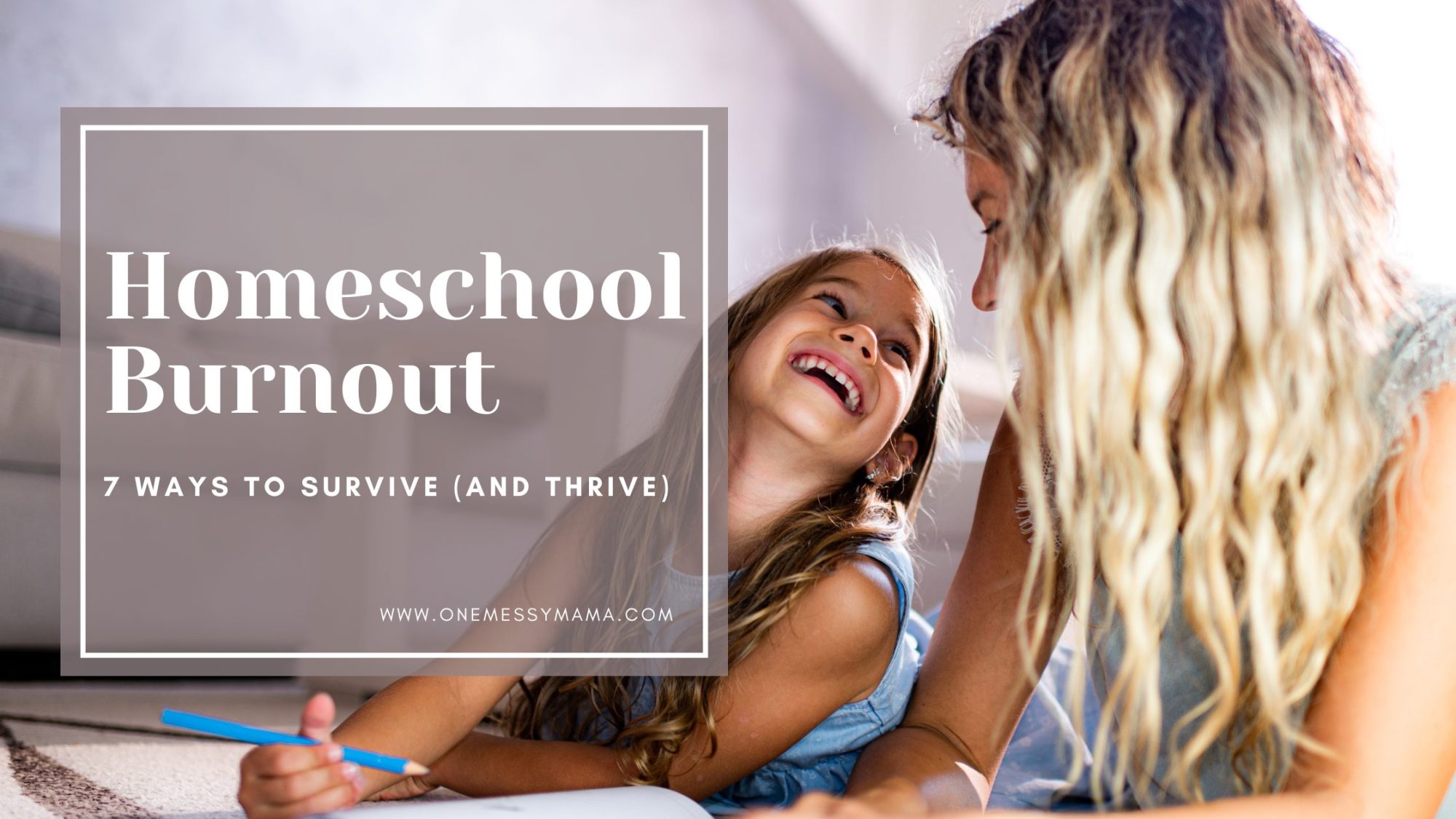
Homeschooling is beautiful. It’s also messy, exhausting, and sometimes feels like we’ve signed up for the hardest full-time job (besides parenting) with zero coffee breaks. Trust me—I know. As a mama to a big crew, I’ve had days where I’ve stared at math worksheets while wondering if I should just enroll everyone in the nearest brick-and-mortar school and run away to a beach hut with a stack of novels and a gallon of iced coffee. #truestory
That, my friends, is called homeschool burnout. And if you’ve ever felt like you’re drowning in lesson plans, extra-curriculars, and Lego chaos, you are not alone. Burnout doesn’t mean you’ve failed. It just means you’re human.
So let’s talk about what it looks like, why it sneaks up on us, and—most importantly—seven practical ways to deal with homeschool burnout before it takes over your home and your sanity.
What is Homeschool Burnout?
Homeschool burnout is that overwhelming exhaustion (physical, emotional, and mental) that creeps in when the weight of educating your children at home becomes too heavy. It shows up as irritability, lack of motivation, mom guilt, endless comparison, or even tears over phonics flashcards.
If you’ve thought: “I can’t do this anymore,”—that’s burnout talking. And while it’s common, it’s also something you can fight back against with the right mindset and tools.
7 Ways to Overcome Homeschool Burnout
1. Simplify Your Curriculum (Less Is More)
One of the sneakiest causes of burnout? Trying to do all the things. We buy fancy curriculum bundles, follow multiple schedules from Instagram, and overload our days with Shakespeare, Latin, science experiments, art projects, and nature walks… all before lunch.
But guess what? Kids don’t need everything at once. Focus on the core subjects—reading, writing, math—and sprinkle in extras when you can. A simple curriculum not only relieves pressure but also creates space for real learning to stick. Remember: depth over breadth.
Pro tip: If you’re searching for “homeschool tips for overwhelmed moms,” start with simplification. Your kids will learn more when you teach less but with consistency.
2. Create a Flexible Routine (Not a Rigid Schedule)
Homeschool burnout thrives in chaos. But it also grows when we try to run homeschool like boot camp. What kids need—and what helps us stay sane—is a rhythm, not a rigid schedule.
Instead of color-coding every 15 minutes, think in blocks: morning reading, late-morning math, afternoon creative time. Build in wiggle room for life’s inevitable messes (like when your toddler pours cereal on the dog or your teen insists they must debate the meaning of life mid-lesson).
A flexible routine gives structure without suffocating everyone.
3. Take Real Breaks (You’re Not a Machine)
Homeschool moms are notorious for running ourselves into the ground. We skip lunch, skip rest, and convince ourselves that pushing harder is the answer. Spoiler alert: it’s not.
Take breaks. Short daily ones (step outside with coffee, do a quick stretch, scroll memes guilt-free), and longer ones too (a homeschool “light week” or even a full break mid-semester). Public schools have in-service days—why can’t homeschool moms?
Pro tip: Sometimes everyone just needs a pajama day with movies and popcorn. Call it “family bonding.” It counts.
4. Find Your Village (You Weren’t Meant to Do This Alone)
Isolation is fuel for burnout. Homeschooling can feel lonely—like you’re carrying the weight of education, parenting, housework, and sanity all on your shoulders. But you don’t have to do this by yourself.
Join a homeschool co-op, Facebook group, or local library program. Swap stories with moms who get it. Share resources. Celebrate wins and cry over the losses together. Your village doesn’t need to be big—just real.
Even one homeschool mom friend who will text you “Yes, I’m hiding in the bathroom too” can make all the difference.
5. Lower the Expectations (Good Enough is Good Enough)
Burnout thrives on perfectionism. We imagine that a “real” homeschool should look like Pinterest—kids at the table, smiling with watercolor sets while reciting poetry. In reality? Someone’s crying, someone’s missing, and someone’s eating glue.
And that’s okay.
Give yourself permission to be a good enough homeschool mom. The dishes can wait. The science project can flop. Your kids don’t need perfect—they need present.
Pro tip: Remember, good enough homeschooling is still successful homeschooling.
6. Prioritize Self-Care (Yes, Mama, You Too)
We preach self-care but forget to practice it. Here’s the truth: you can’t pour into your kids if your cup is bone dry. Self-care doesn’t have to be a spa day—it can be small but intentional moments:
- Waking up 15 minutes earlier to sip coffee in peace
- Listening to your favorite podcast during dishes
- Saying “no” to that extra committee at church
- Taking a walk, alone, without anyone asking for snacks
Self-care is oxygen. Without it, burnout suffocates.
7. Remember Your “Why” (Reignite the Joy)
On the hardest days, go back to the beginning. Why did you choose homeschooling? Maybe it was freedom, faith, family bonding, or giving your child the space to thrive.
Write that reason down. Stick it on your fridge. Speak it out loud when you’re drowning in grammar rules.
When we reconnect with our “why,” the daily grind shifts back into perspective. Homeschooling becomes less about getting through another math lesson and more about building a life with our kids.
Final Thoughts: Homeschool Burnout Doesn’t Mean You’ve Failed
Homeschool burnout is real. But it doesn’t mean you’re not cut out for this. It means you’re human, doing one of the hardest and most meaningful jobs in the world.
Take a breath. Simplify. Rest. Lean on your village. Love your kids and yourself with grace.
And remember, mama—you don’t have to get it perfect to make it beautiful.





Leave A Comment